How AI medical record review helps adjusters standardize bodily injury claim decisions — faster analysis, consistent outcomes, and lower dispute rates.
Insights for insurance & legal teams
How AI medical record review helps adjusters standardize bodily injury claim decisions — faster analysis, consistent outcomes, and lower dispute rates.
AI medical record review automates sorting, extraction, and summarization of medical records for PI cases. Learn how it works and how to choose a platform.
Learn the elements of a defensible medical chronology — completeness, accuracy, source-linking, and how AI ensures every standard is met for PI litigation.
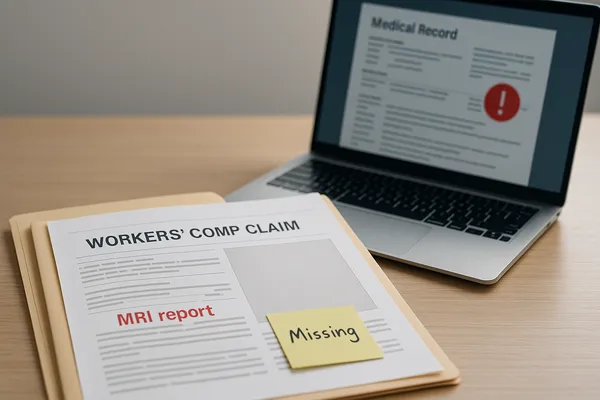
Learn how AI medical chronology tools handle workers' comp cases — treating vs. IME physicians, MMI determinations, return-to-work docs, and more.
See average personal injury settlement amounts by case type—car accidents, TBI, slip-and-fall—and learn how AI-assisted documentation directly affects payout levels.
See how personal injury firms used AI-assisted demand letters to cut prep time, increase settlement offers, and handle higher caseloads without adding staff.
Real-world results from AI-assisted medical record summaries in personal injury cases—time savings, accuracy benchmarks, settlement outcomes, and firm case studies.
A step-by-step guide to the medical chronology workflow for personal injury cases — from client intake and record retrieval through demand and settlement.
Learn how AI-powered medical summaries improve Medicare Set-Aside accuracy, reduce CMS rejection risk, and cut review time for personal injury attorneys.
An insurance ops leader's AI journey mapped against Ramp's hypergrowth playbook. What translates, what doesn't, and how to move in the next 90 days.
Short, practical writing on AI medical chronologies, demand letters, and record review. No filler.